
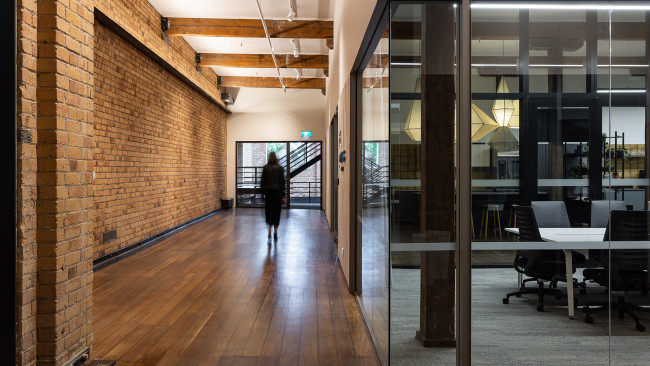
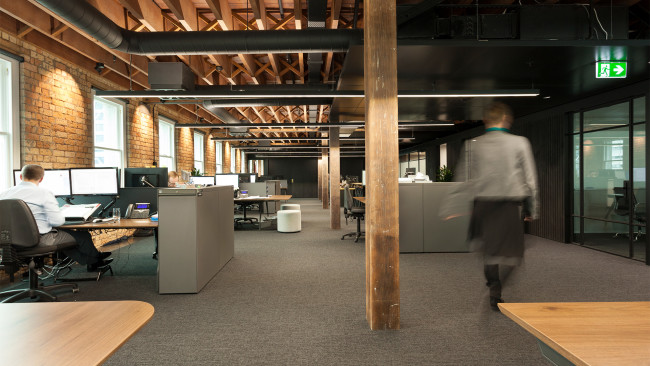
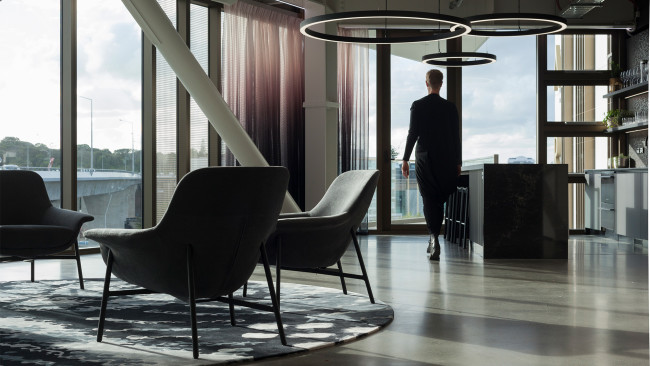
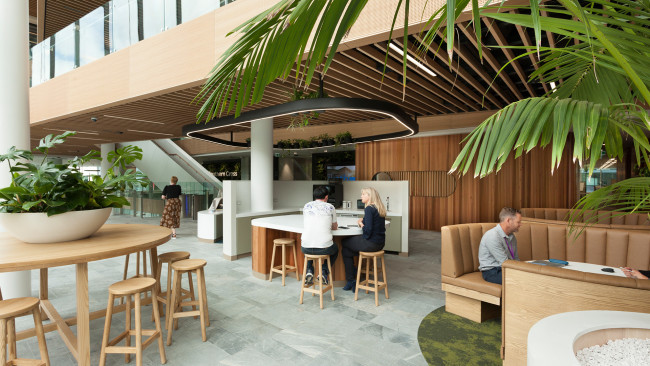
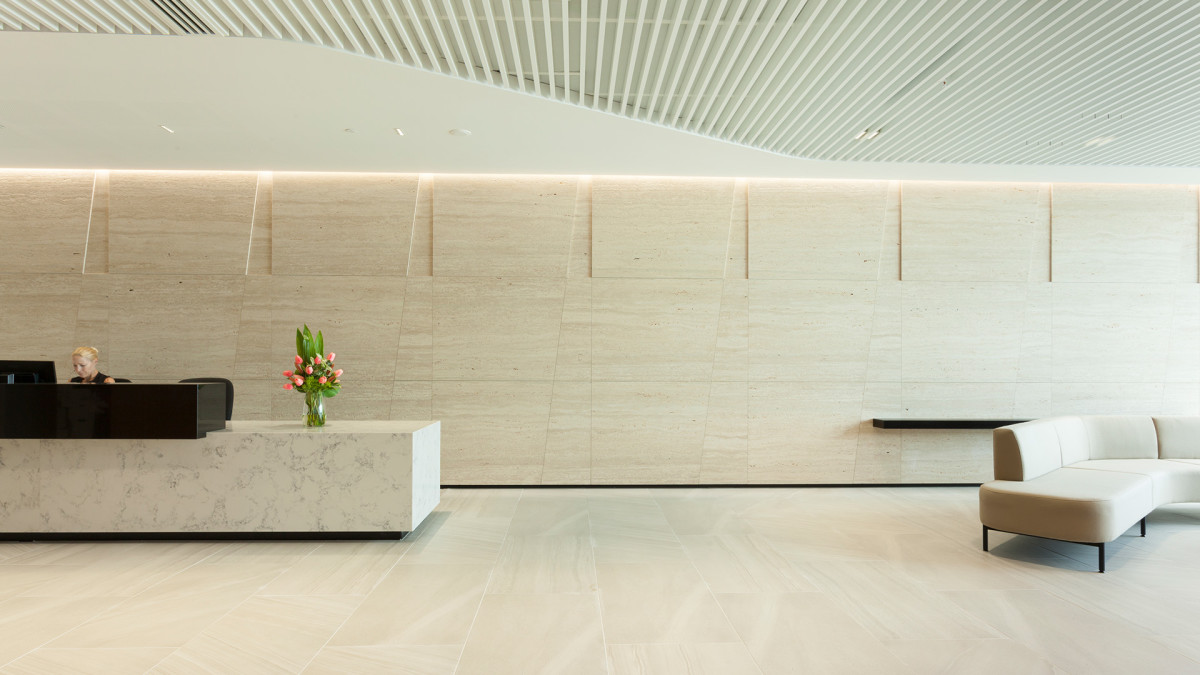
Les Mills International – Levels G,1,2 & 3, 22 Centre Street, Auckland.
LMI had already signed the lease for new office accommodation at 22 Centre Street, Auckland City when they engaged the designers for the fit out. The building LMI selected was a recently refurbished mixed use development with basement car parking, ground floor retail tenancies (x2), first floor office tenancies (x2) and second floor apartments (x4) 3 of which had a further floor of accommodation within them.
From the outset LMI sought to have a new workplace environment which was reflective of the high energy and visually powerful group fitness programmes they design, develop and distribute globally from their New Zealand headquarters.
The office was to accommodate a wide range of end users from the Creative Directors & Choreographers who develop the group fitness programmes to marketing, finance and the LMI executive team to name but a few.
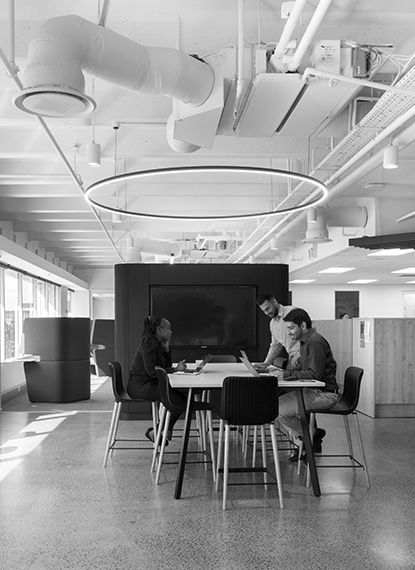
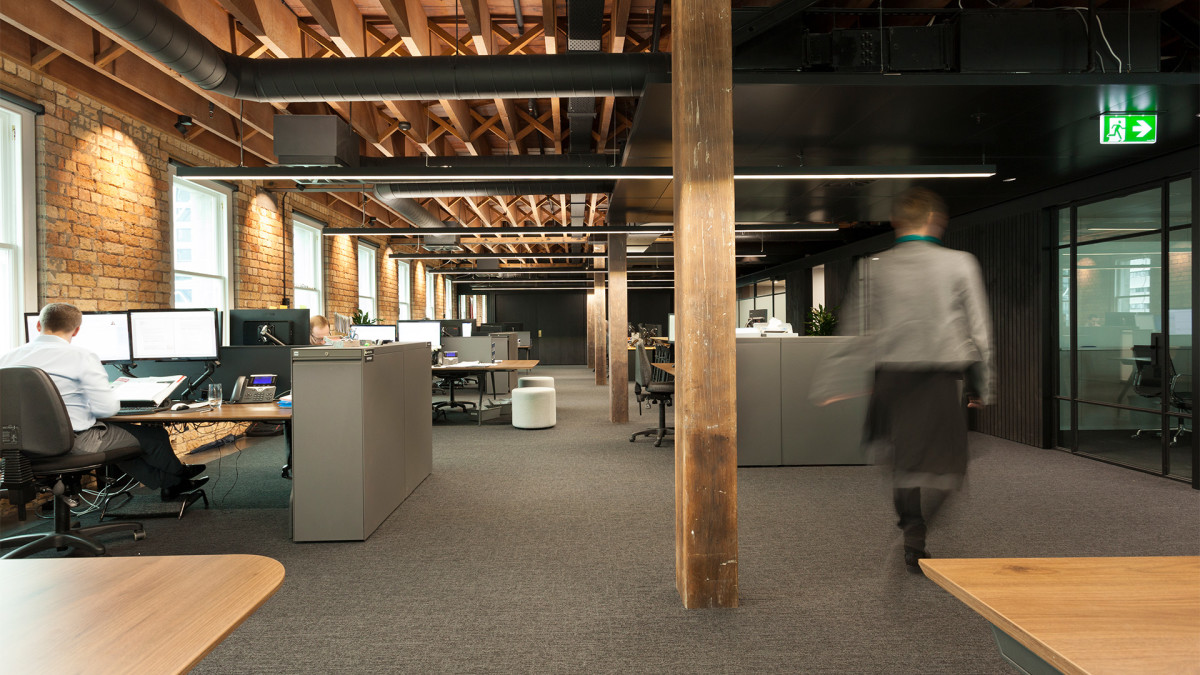
A key objective for LMI (who were relocating from a single, large floor plate tenancy) was to provide a new environment that would better encourage and support more opportunity for collaborative working and socializing. At first glance this was not going to be an easy objective to fulfill given the fractured nature of the space they were to occupy. LMI had taken the lease on the entire building, minus one apartment space which was already occupied by a PR agency.
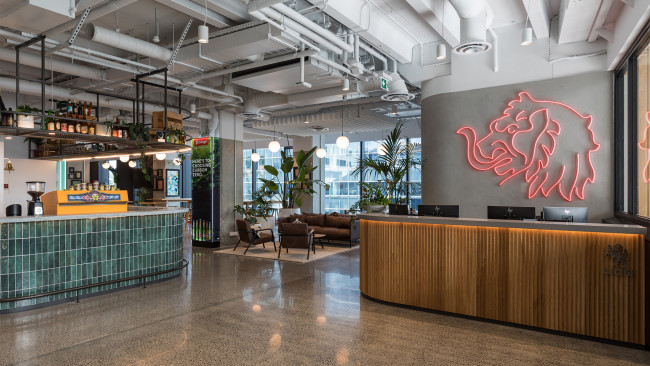
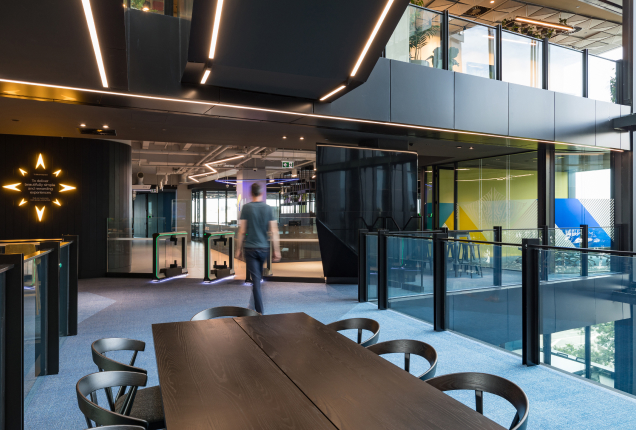
The briefing process involved a cross section of LMI staff and early workshops established that upon entering any new home for LMI you should feel like you are crossing a threshold or stepping through a portal into the LMI “One Tribe” environment. The use of bold colours, expression of core values, “be a fun place to work”, to reflect the global nature of LMI and getting people together more were some of the other desired outcomes.
LMI asked for a planning methodology and concept for the building to be all encompassing however, budget constraints meant that they would implement parts of the overall concept over a number of years.
Given the nature of the building (a variety of quite isolated and not so isolated spaces disbursed / branching out from a central core and vertical circulation route) the humorous side of an early metaphor likening this new home for LMI to the human body was not lost. Reception / arrival and the adjacent ground floor studio space becoming the heart (through which all staff must pass), the central circulation stair and staff lounge being the core, with staff providing the stability.
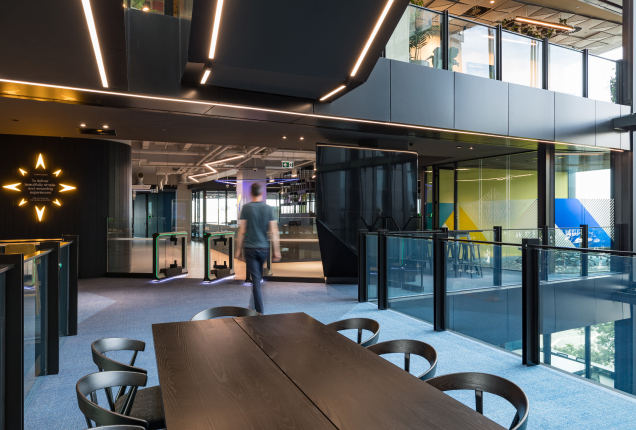
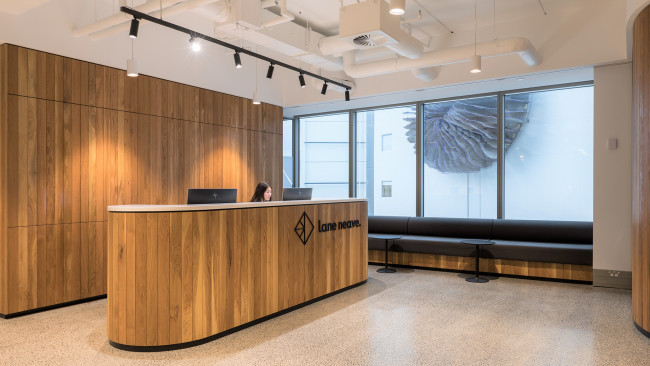
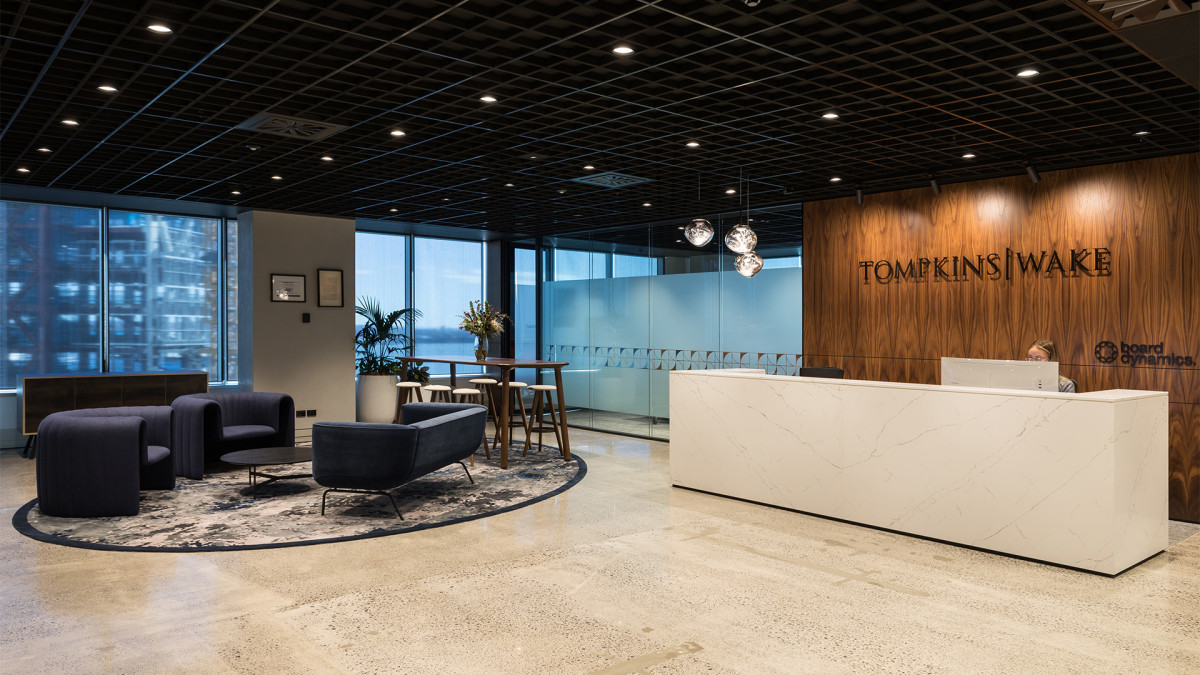
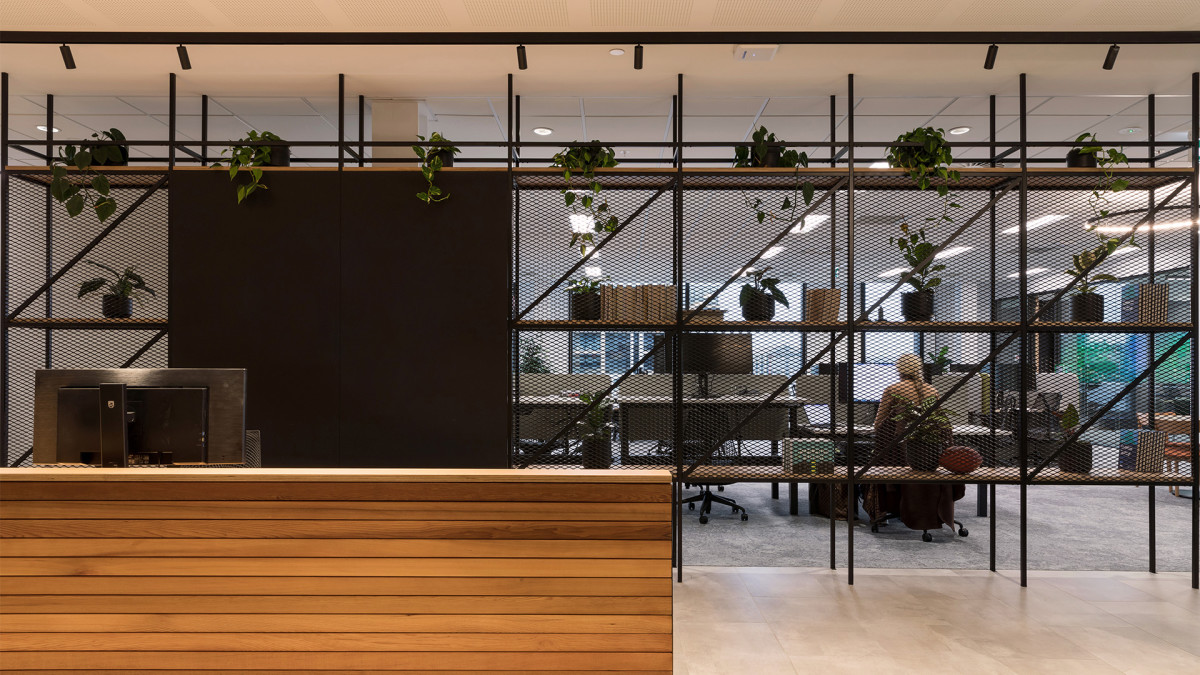
Block and stack studies led to the ground floor retail spaces being combined, by way of base building modifications creating a large opening in the intertenancy wall. This allowed the main entry / reception and studio spaces to be in the thick of the action and easily accessible to all.
A second penetration was made through the main core allowing direct access from reception to the lift lobby (use of lift not encouraged!) and stairwell.
The base building originally provided 2 entrances. One for the retail spaces and a second for access to the office floor and apartments. These base building modifications allow all staff to enter / exit through the ground floor reception area.
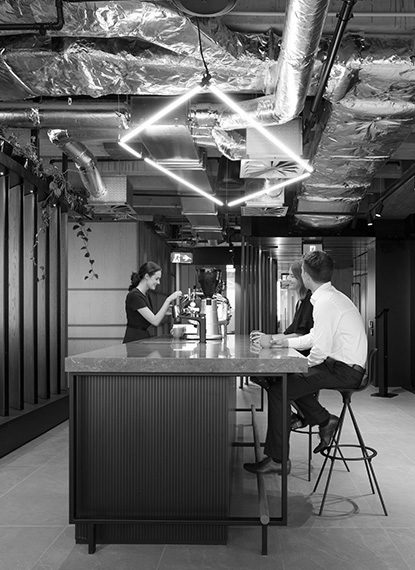
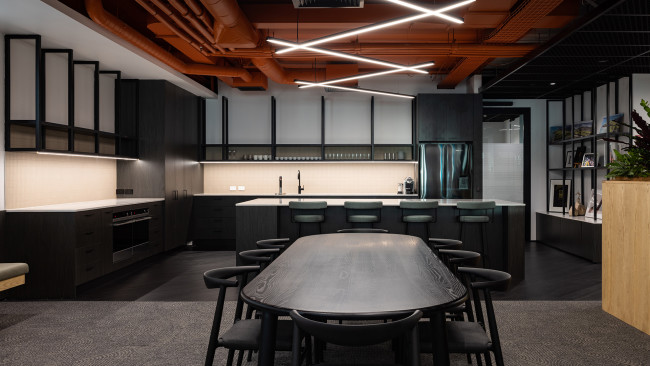
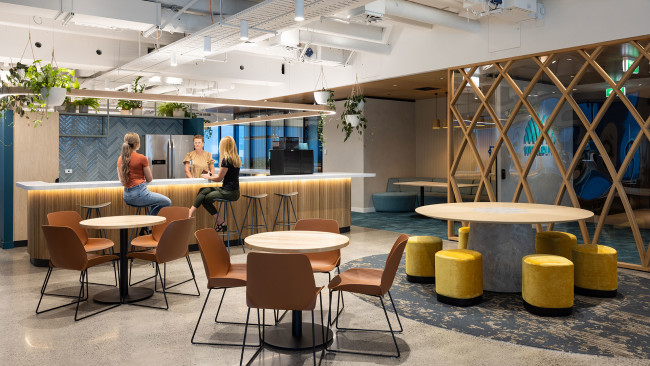
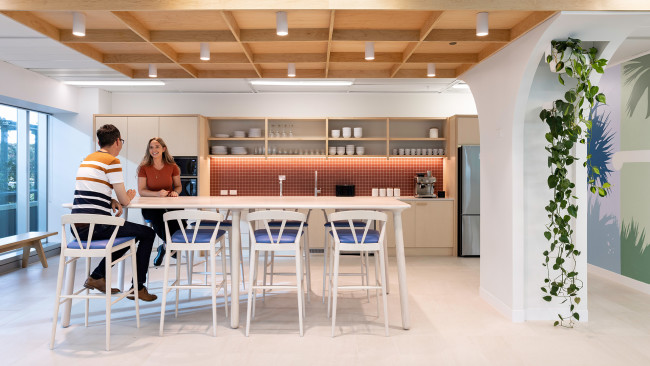
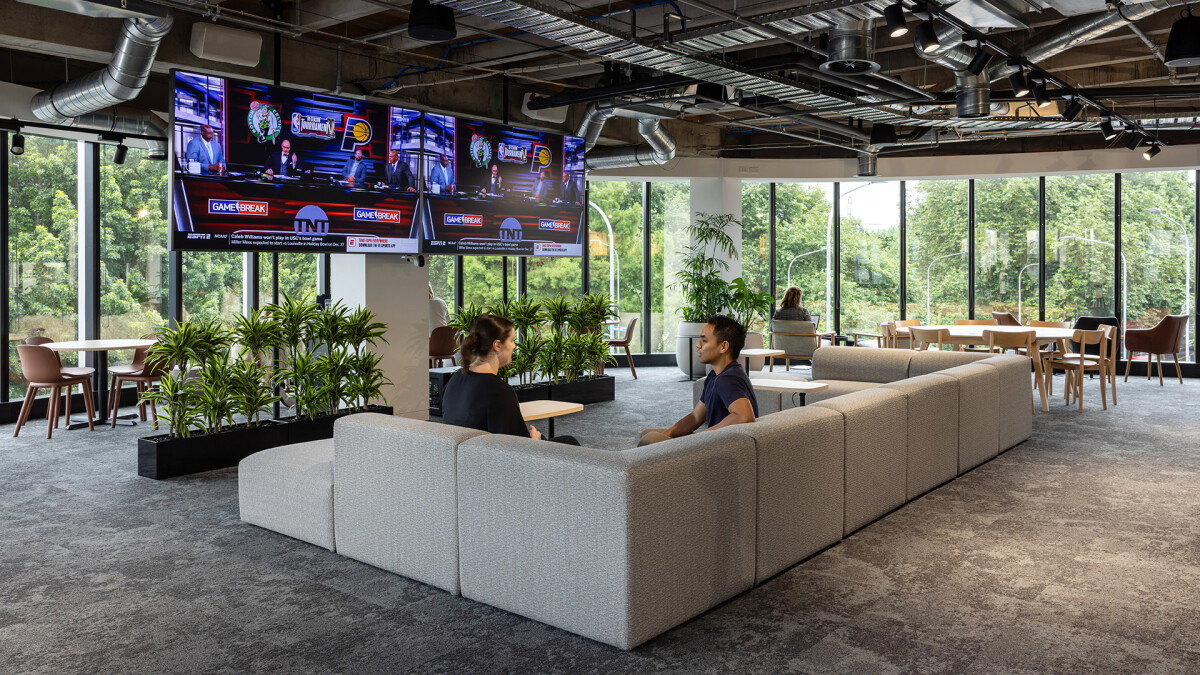
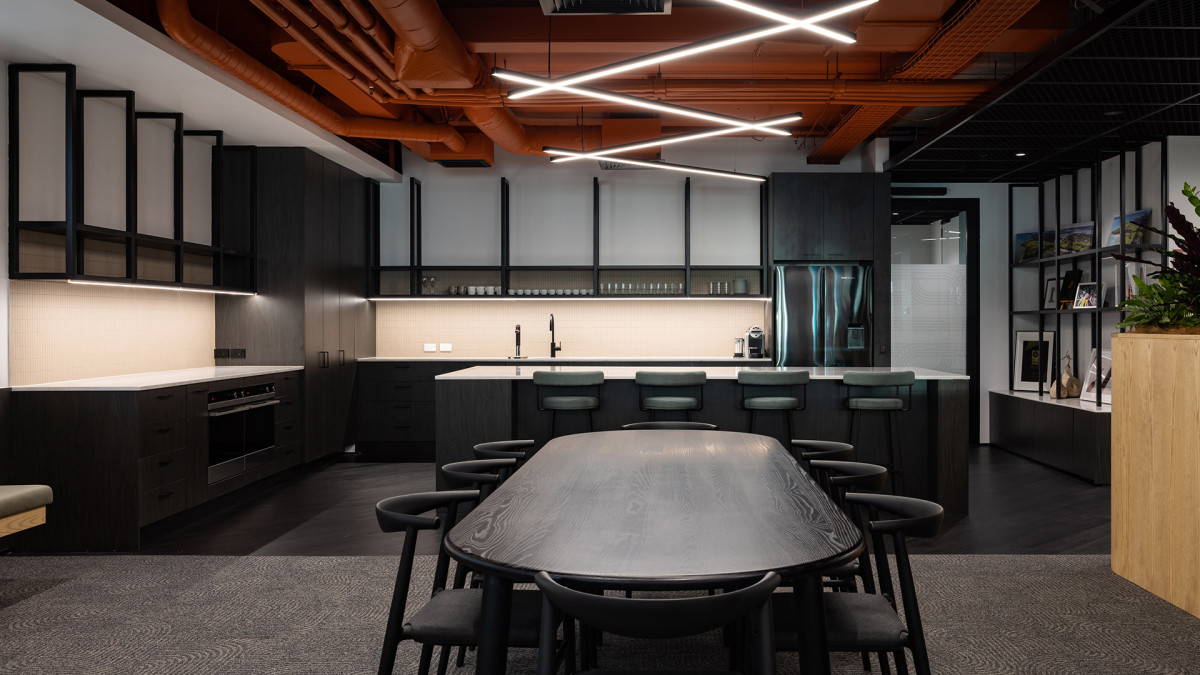
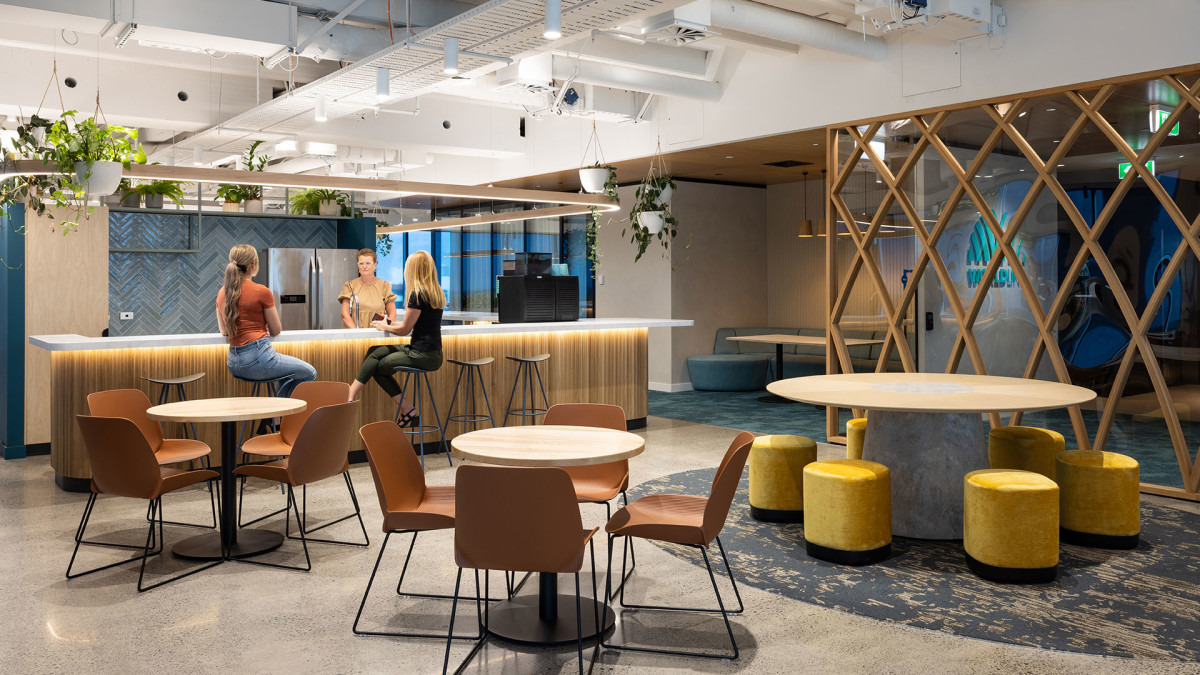
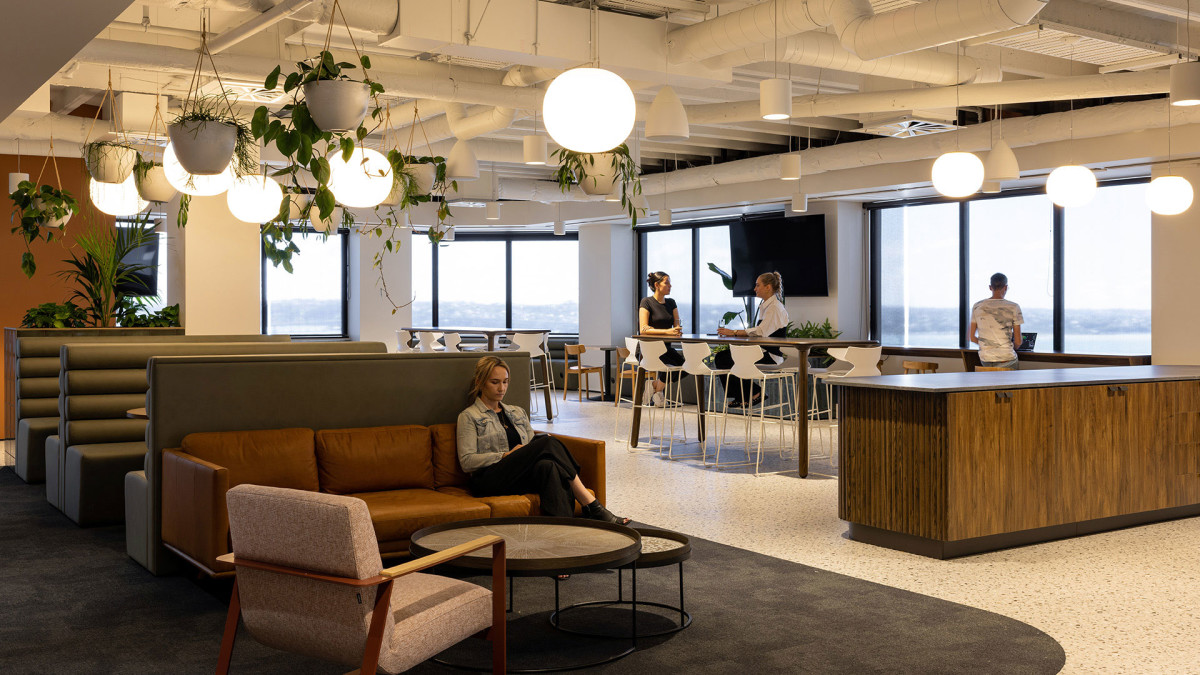
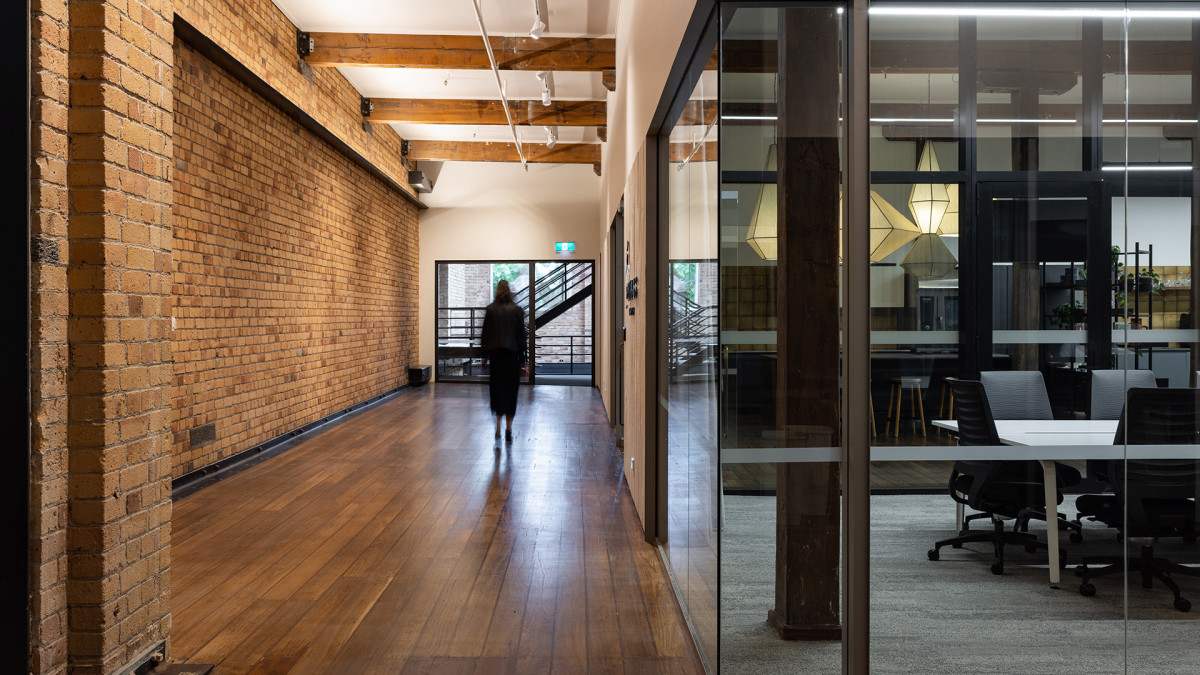
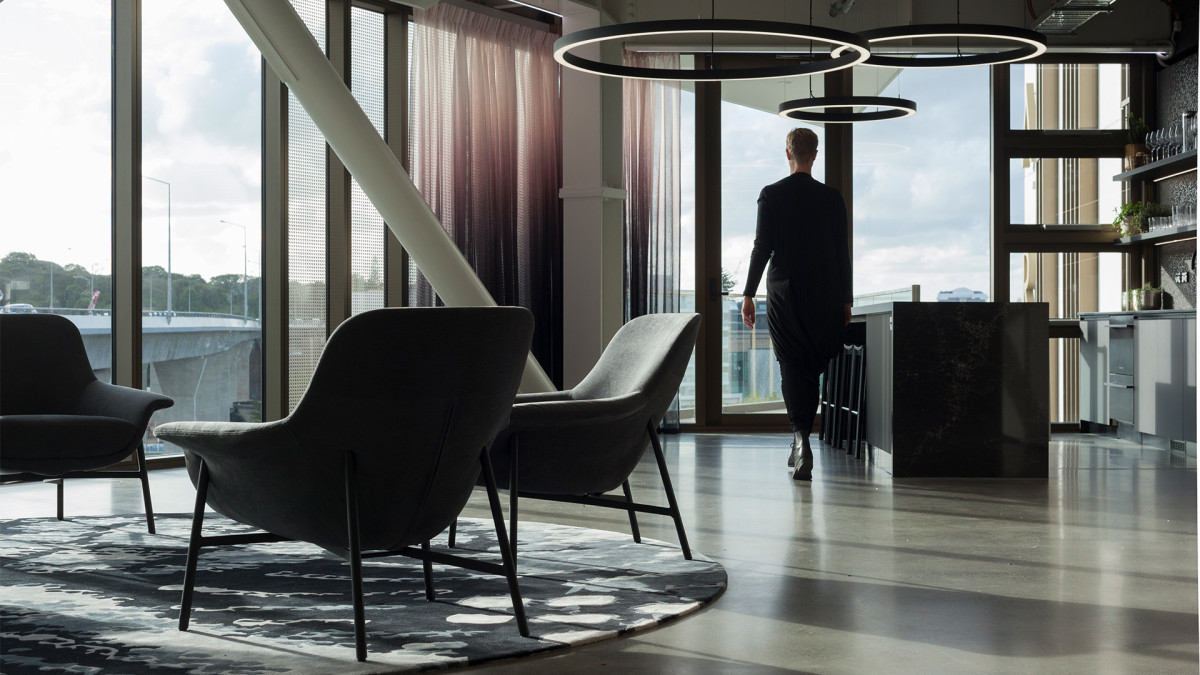
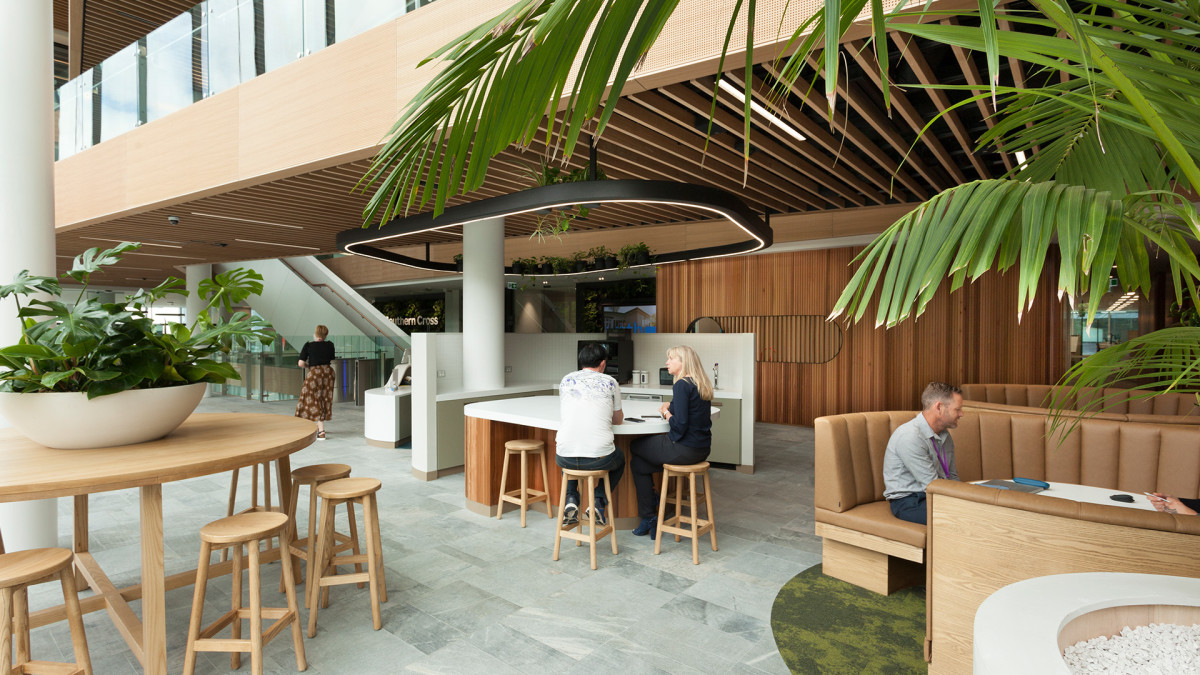
The first floor (the only floor in the original building being a ‘traditional’ office floor) saw 2 tenancies combined into one with touch down, meeting and main staff lounge / café located directly off the lift landing and main stairwell. There is also a generous outdoor terrace area accessed from the staff lounge and workspaces.
Level 2 was originally designed as apartment spaces and was at risk of becoming very isolated workspaces. It was decided to locate those departments who not only required separation due to the need for privacy and acoustic reasons within the apartments. This saw Marketing and People & Culture take an apartment each. People & Culture took the lower floor of one apartment. The upper floor then became the main training and presentation room. Marketing took the only single floor apartment. They are also the 2 departments who travel within the office more frequently.
The 3rd apartment became a mix of meeting and quiet / touch down space for all staff.
A very high proportion of existing furniture, filing and storage was re used. This also provided some challenges in the early planning stages of the project.
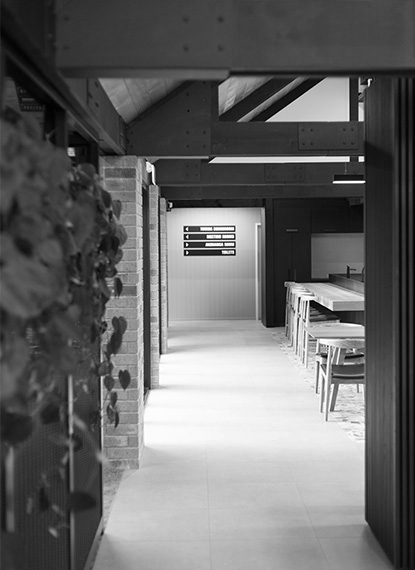
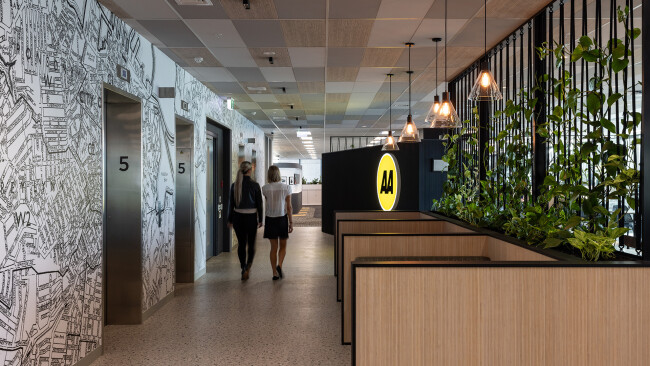
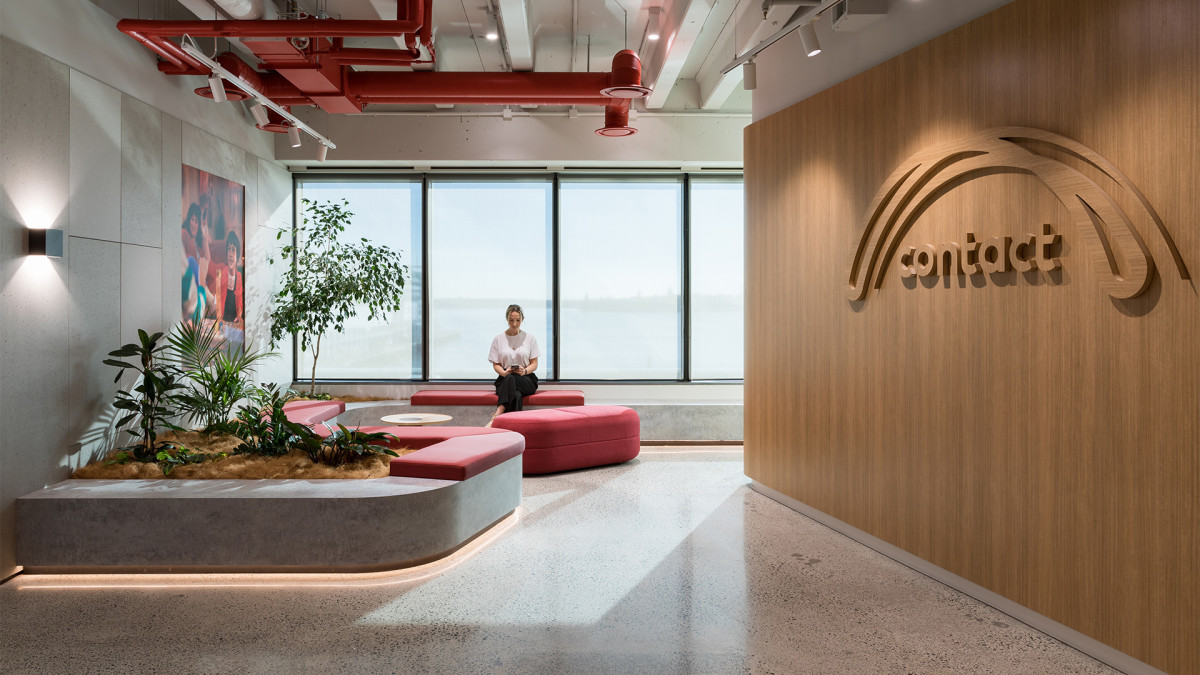
The use of bold colours and graphics reflective of the end product was a key driver in the selection of materials and finishes. The marketing team at LMI provided graphic content by way of customer quotes and collateral relating to the products LMI produce.
“We are delighted with the job done by the team at Stack, in designing the fit out of our new Head office complex. Staff morale has shot up and it is a pleasure coming to work here every day."
Phillip Mills: CEO - Les Mills International Ltd

click here to view more images
click here to view the prodesign article
Credits:
Talisha Haakma - Graphic Designer