
Hudson Gavin Martin
Brief
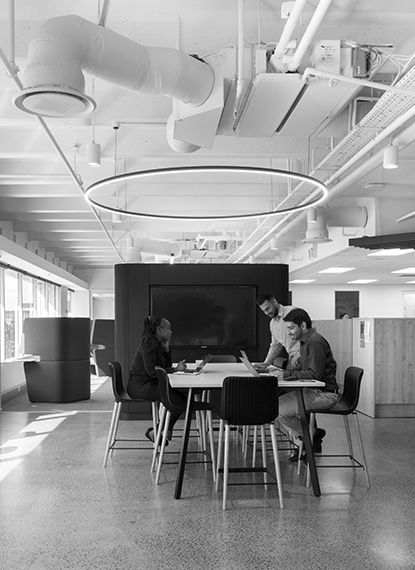
The team of three legal partners working in the field of intellectual property and technology law, were setting up a new practice. The brief was to create an open and approachable interior, where clients were comfortable and welcomed, while still maintaining a professional presentation, and requiring an office based interior. The HGM team wanted a modern feeling interior, where natural light and the pleasant views were shared, while privacy and concentration could be had. The space should be one the HGM team felt at home in, as long hours are the norm, and family members often visit. Planning had to include a sub-tenancy, which could easily be included into the HGM office in years to come. The fitout had to be delivered on a prescribed budget.
HGM were also working with ‘alt’ Design on the creation of their new brand identity. The identity played on the use of well known things in groups of threes – “ABC”, “hop, skip, jump”, “knife, fork, spoon”, “rock, paper, scissors” and so on. It would be important to achieve an interior environment that worked with the brand identity.
Concept
To create a legal office that “feels more like an ad agency”, and is in sync with the brand identity. Create a central gathering point, which allows both HGM team and clients to blend. Create offices without enclosing the space, that work with the base building elements and view. Work with the clever brand identity and mirror the simple white background of the graphics, and create elements of three where possible. Work with ‘alt’ team to include their ideas and the brand artwork pieces.
Scheme
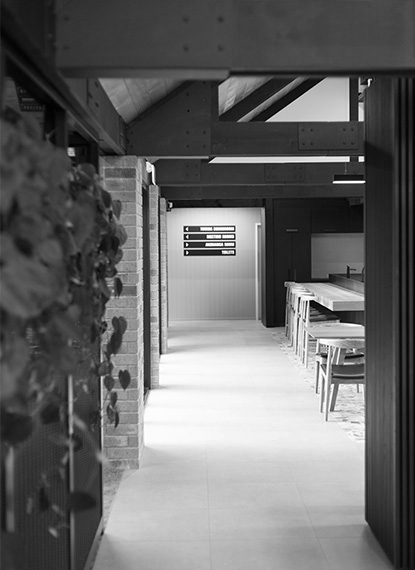
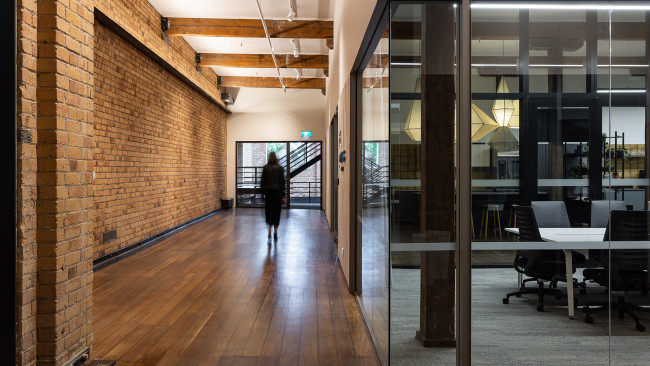
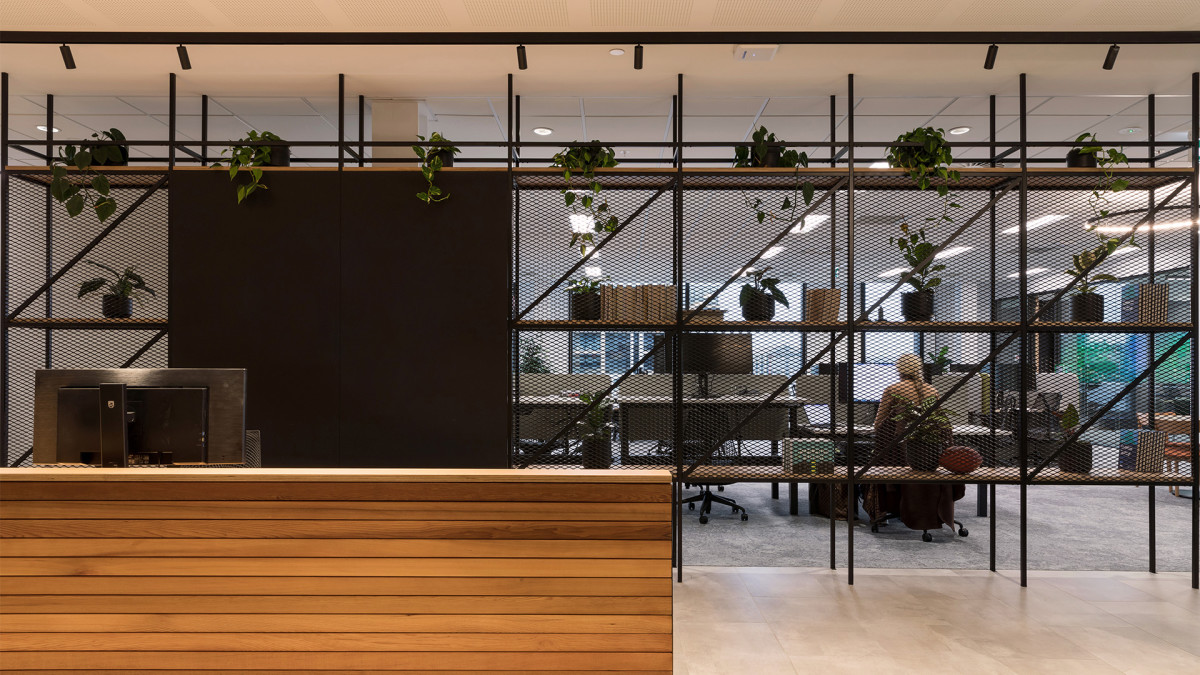
The layout works with the square shaped building, utilising simple but rigorously symmetrical planning. Offices and internal workspaces are created with a minimum of hard wall, and a very light framed aluminium partitioning system to enhance openness. A glazed fillet joins all walls to the perimeter at mullions, creating an expanded view. All internal work spaces have access to the views and view corridors are created though the whole building. The deepest internal space is allocated to utilities and the kitchen.
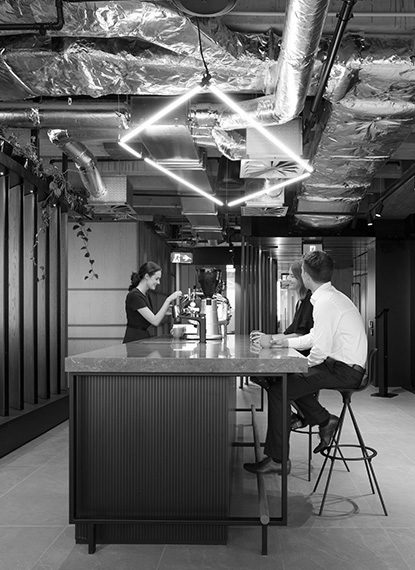
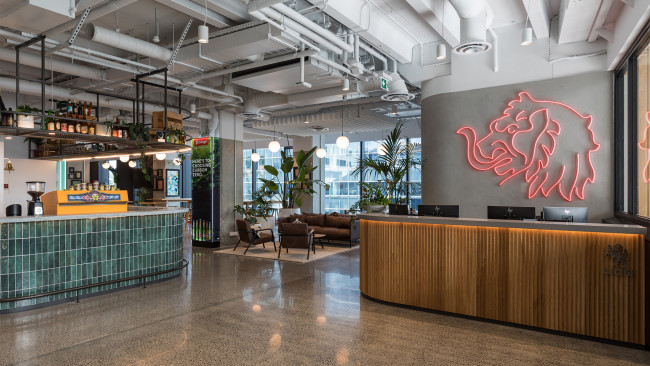
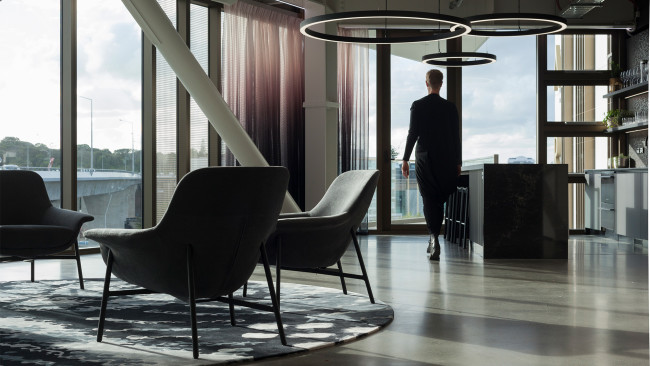
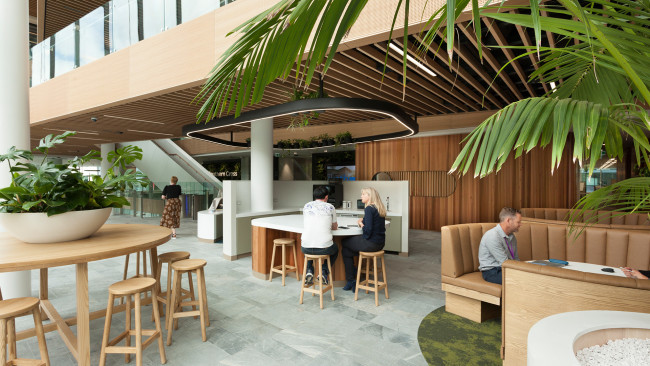
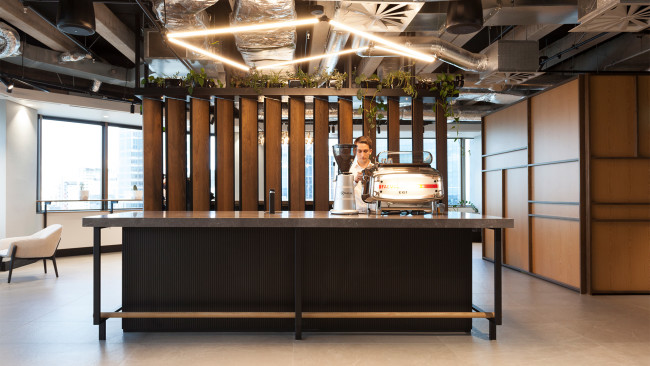
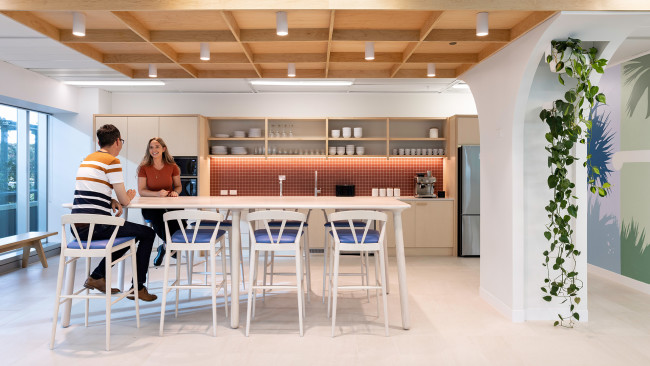
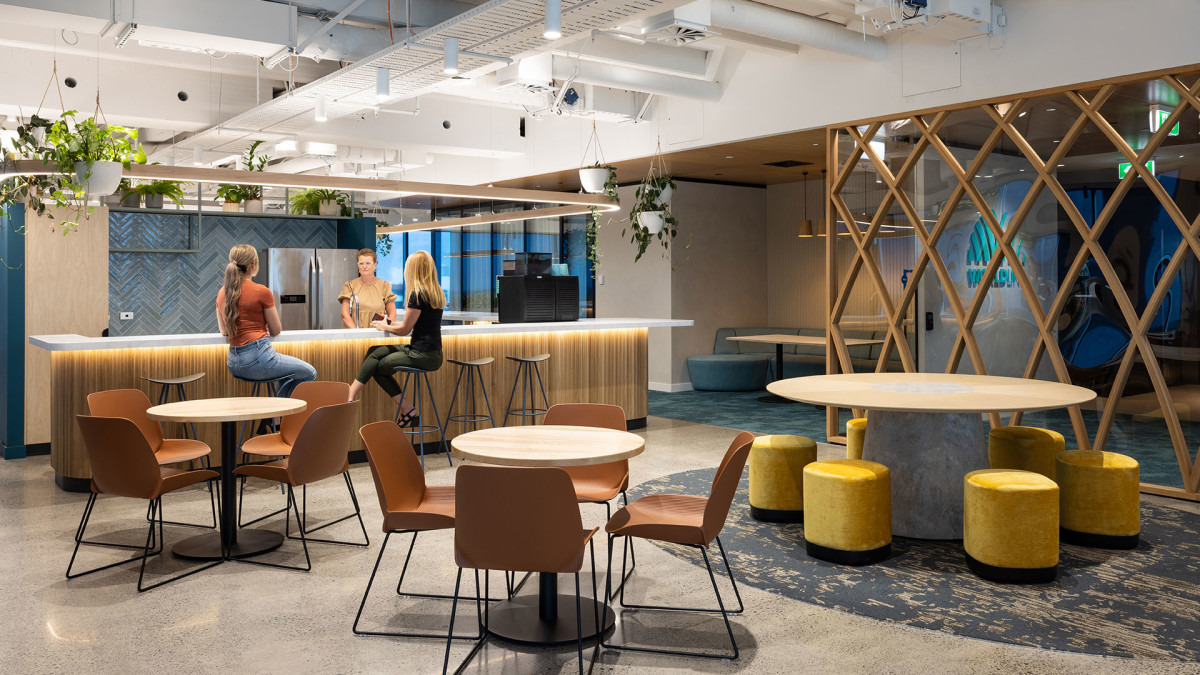
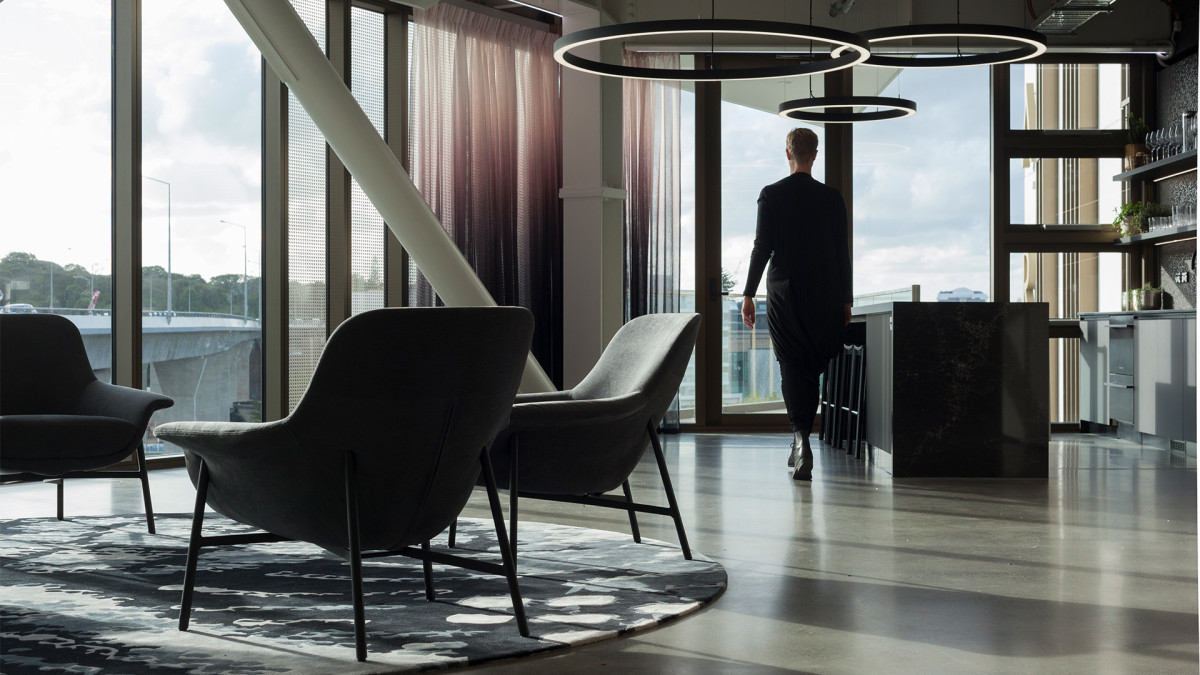
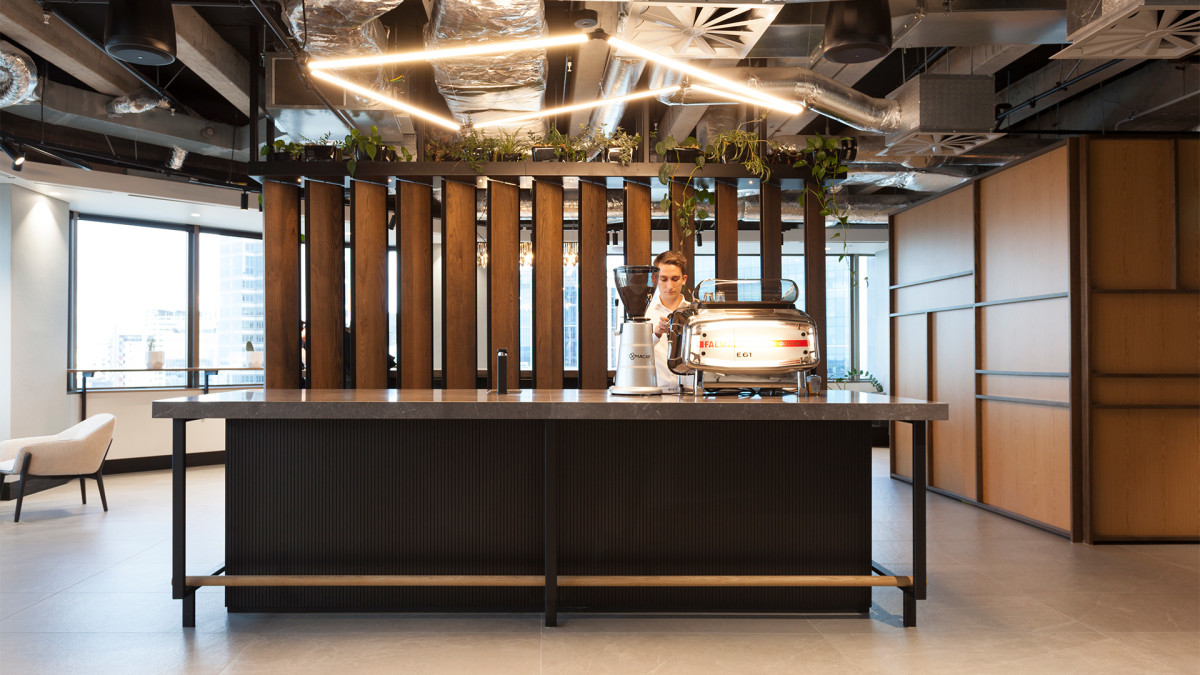
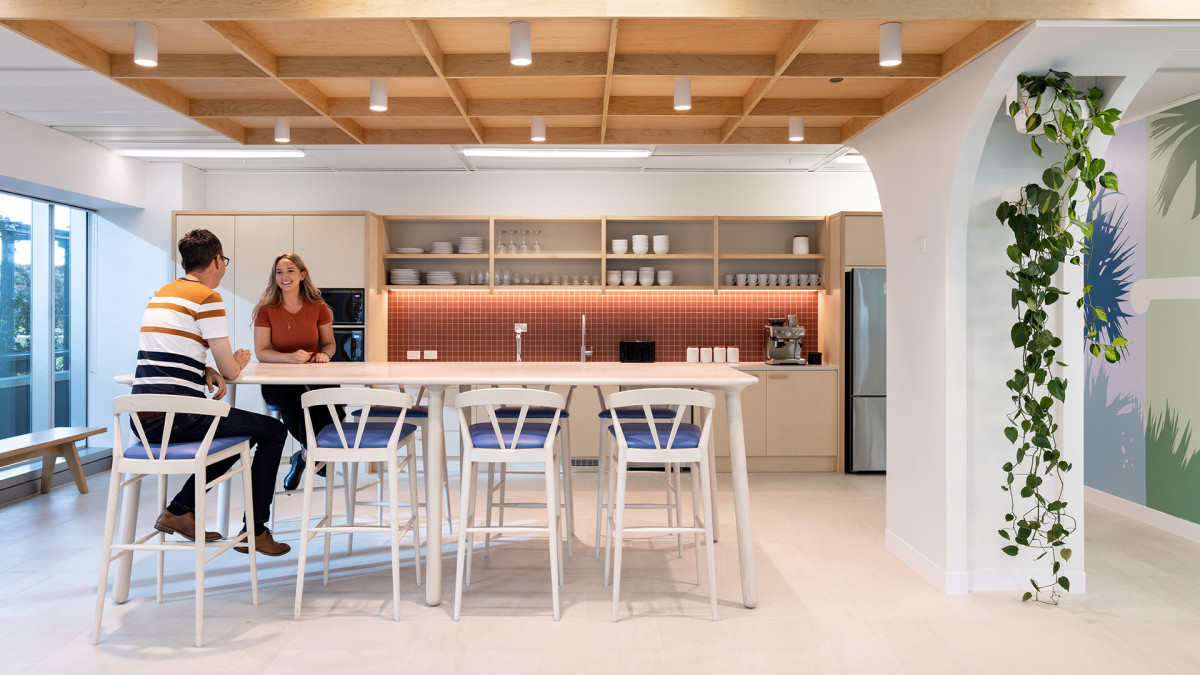
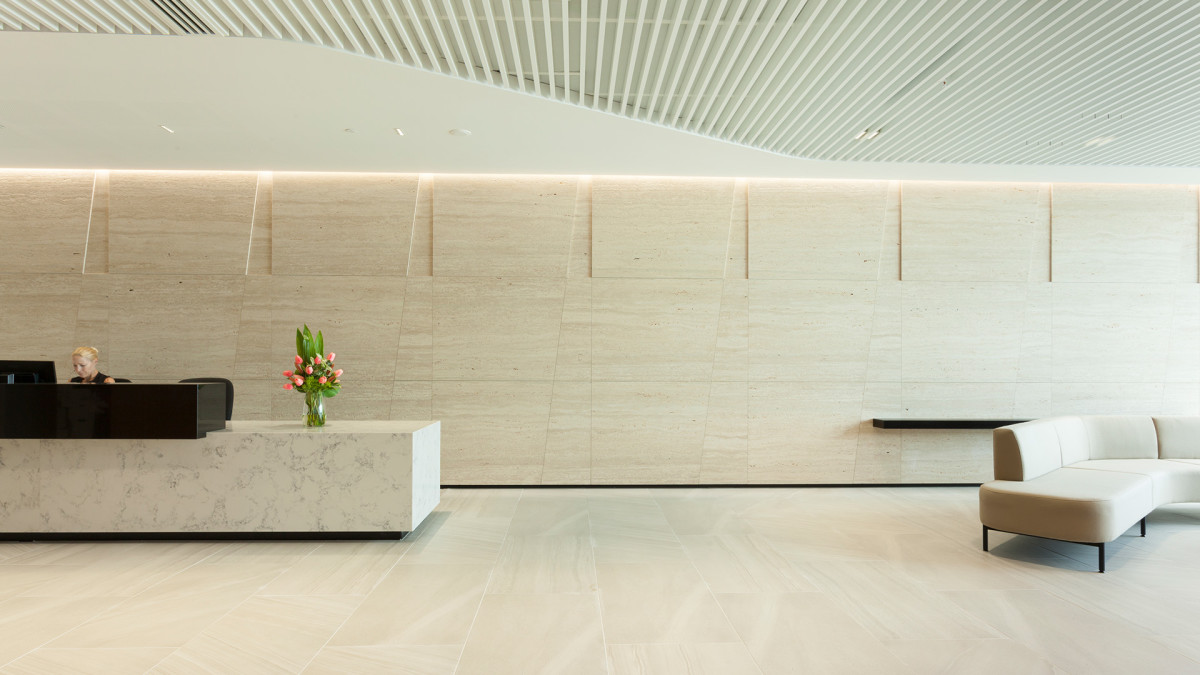
The central café space is a hub, and it can be seen as a welcoming space from the reception area. When entertaining, the reception, café and adjacent lounge area can be used together. A love of coffee meant that an espresso machine was a “must have”, and it takes a proud place central to the café space.
The directors had on their wish list – the colour British Racing Green – which was a strong colour element used sparingly, but appearing as the large glowing café bench, a framing feature to the boardroom credenza unit and in reception chair upholstery. The simple white used on walls and ceilings, and grey flooring tiles and carpet are in line with the brand identity.
While office sizes are only between 6m2 and 12m2, furniture is simple, light and mobile. All elements are modular. The directors all came from environments where office layouts were fixed, and they wanted each office owner to set up their furniture to suit personal requirements. Data and power requirements to each office are provided to give this flexibility.
The HGM logo also includes three symbols in circles after each name. This subtle circular motif is reflected in the ceiling panels, door handles, stool and table bases, air supply grilles etc.
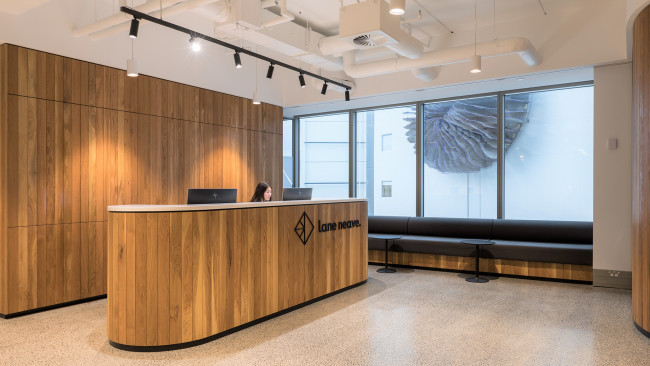
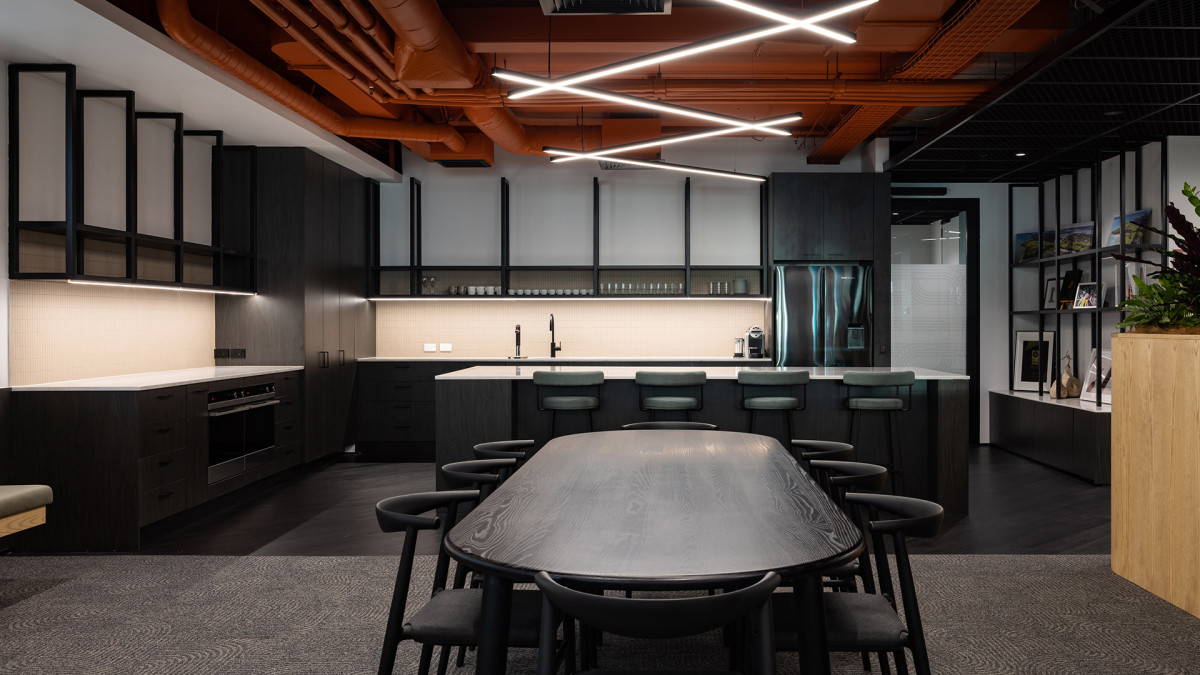
The notion of “3” is used in other subtle ways. Matt, satin and gloss finishes are used on the lobby panelling, black, white and grey in the cafe acoustic wall panelling. Proportions of joinery are divided into threes. More literal use of the identity include the opaque film manifestation band on glass partitioning, the “Hungry” light fitting in the café made of knives, forks and spoons and the reception area rug.
Physical
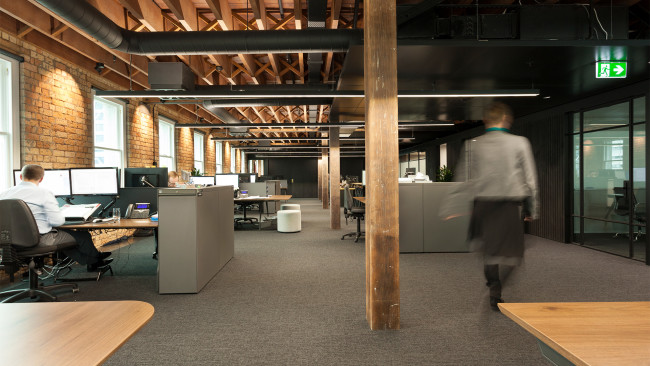
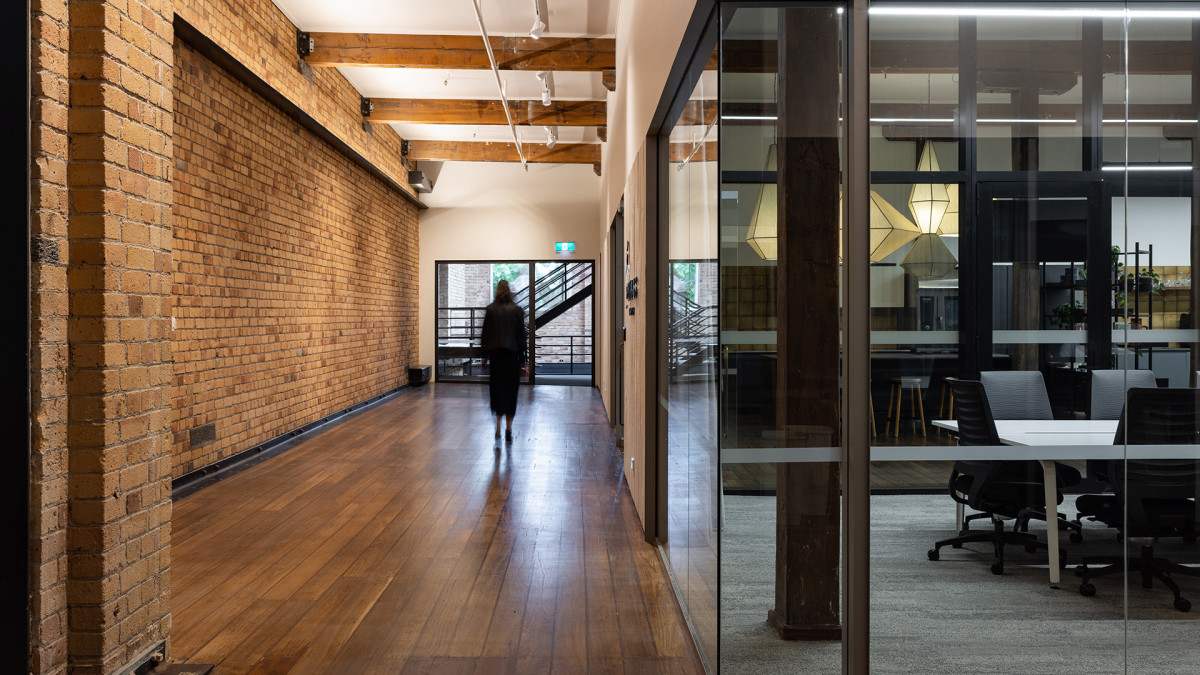
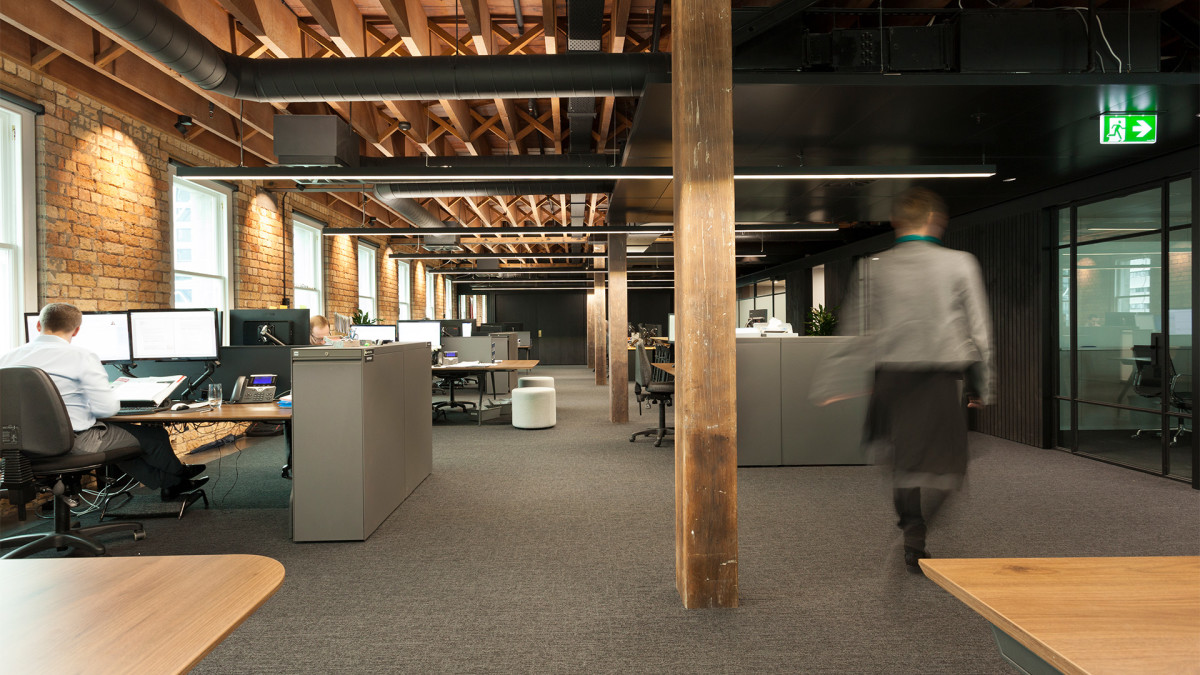
Low beam heights mean a 2600h ceiling. Volume was enhanced by exposing areas of slab above and diverting services. Alignment to mullions influenced office size and meant they would be potentially small and pokey, but the use of glazed fillets to close around the sill and pelmet and to the office front helped this problem. When so many partitioned areas are required, the problem of creating an ‘aluminium forest’ was solved by using the Hafele system of panels and light sliding doors.This maintained visual openness, views, and accessibility of team members – who frequently work with doors open.
Brief
The team of three legal partners working in the field of intellectual property and technology law, were setting up a new practice. The brief was to create an open and approachable interior, where clients were comfortable and welcomed, while still maintaining a professional presentation, and requiring an office based interior. The HGM team wanted a modern feeling interior, where natural light and the pleasant views were shared, while privacy and concentration could be had. The space should be one the HGM team felt at home in, as long hours are the norm, and family members often visit. Planning had to include a sub-tenancy, which could easily be included into the HGM office in years to come. The fitout had to be delivered on a prescribed budget.
HGM were also working with ‘alt’ Design on the creation of their new brand identity. The identity played on the use of well known things in groups of threes – “ABC”, “hop, skip, jump”, “knife, fork, spoon”, “rock, paper, scissors” and so on. It would be important to achieve an interior environment that worked with the brand identity.
Concept
To create a legal office that “feels more like an ad agency”, and is in sync with the brand identity. Create a central gathering point, which allows both HGM team and clients to blend. Create offices without enclosing the space, that work with the base building elements and view. Work with the clever brand identity and mirror the simple white background of the graphics, and create elements of three where possible. Work with ‘alt’ team to include their ideas and the brand artwork pieces.
Scheme
The layout works with the square shaped building, utilising simple but rigorously symmetrical planning. Offices and internal workspaces are created with a minimum of hard wall, and a very light framed aluminium partitioning system to enhance openness. A glazed fillet joins all walls to the perimeter at mullions, creating an expanded view. All internal work spaces have access to the views and view corridors are created though the whole building. The deepest internal space is allocated to utilities and the kitchen.
The central café space is a hub, and it can be seen as a welcoming space from the reception area. When entertaining, the reception, café and adjacent lounge area can be used together. A love of coffee meant that an espresso machine was a “must have”, and it takes a proud place central to the café space.
The directors had on their wish list – the colour British Racing Green – which was a strong colour element used sparingly, but appearing as the large glowing café bench, a framing feature to the boardroom credenza unit and in reception chair upholstery. The simple white used on walls and ceilings, and grey flooring tiles and carpet are in line with the brand identity.
While office sizes are only between 6m2 and 12m2, furniture is simple, light and mobile. All elements are modular. The directors all came from environments where office layouts were fixed, and they wanted each office owner to set up their furniture to suit personal requirements. Data and power requirements to each office are provided to give this flexibility.
The HGM logo also includes three symbols in circles after each name. This subtle circular motif is reflected in the ceiling panels, door handles, stool and table bases, air supply grilles etc.
The notion of “3” is used in other subtle ways. Matt, satin and gloss finishes are used on the lobby panelling, black, white and grey in the cafe acoustic wall panelling. Proportions of joinery are divided into threes. More literal use of the identity include the opaque film manifestation band on glass partitioning, the “Hungry” light fitting in the café made of knives, forks and spoons and the reception area rug.
Physical
Low beam heights mean a 2600h ceiling. Volume was enhanced by exposing areas of slab above and diverting services. Alignment to mullions influenced office size and meant they would be potentially small and pokey, but the use of glazed fillets to close around the sill and pelmet and to the office front helped this problem. When so many partitioned areas are required, the problem of creating an ‘aluminium forest’ was solved by using the Hafele system of panels and light sliding doors.This maintained visual openness, views, and accessibility of team members – who frequently work with doors open.